Fridge · Freezer · Wine & beverage coolers

Refrigerator and freezer repair in Oak Lawn

Food spoils fast once a fridge climbs past 40°F. Call now and we’ll line up a local technician who works on your brand.

Most refrigerator failures trace back to a short list of parts: the evaporator fan, the defrost system, the condenser fan, the start relay or the control board. A sealed-system failure (compressor or refrigerant leak) is the expensive outlier, and it is less common than people fear.

Before anyone comes out, a few checks at home can save you a service call or at least help the technician arrive with the right part. They take about ten minutes.

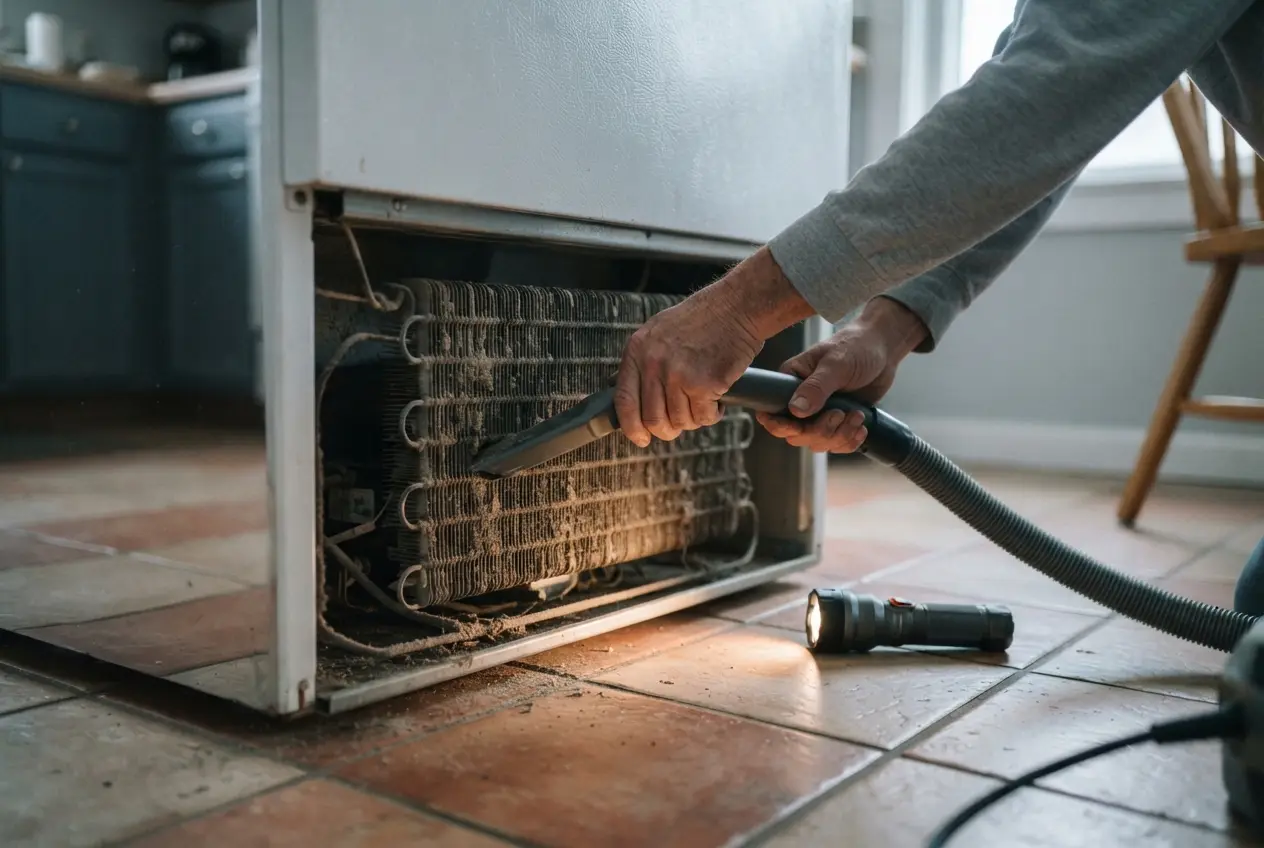
Hands vacuuming dust from a refrigerator condenser coil, flashlight on the kitchen floor

Before you call

Ten minutes of checks before you call

  • Put an appliance thermometer in a glass of water on the middle shelf. After a few hours it should read 37°F to 40°F in the fridge and 0°F in the freezer. The dial on the control is not a thermometer.
  • Pull the kick plate or look behind the unit. A condenser coil matted with dust and pet hair makes the compressor run hot and long. Vacuum it with the power off.
  • Open the freezer and listen near the back panel. Silence where you normally hear a fan usually points to the evaporator fan or a frozen-over coil.
  • Check that the door gasket grips a dollar bill all the way around. A torn or flattened gasket lets warm, humid air in and causes frost.
  • Make sure nothing is blocking the vents between the freezer and fresh-food sections. Overpacking is a common cause of a warm fridge with a cold freezer.

Symptoms

What your refrigerator is doing, and what usually causes it

Check first something you can safely look at yourself · Technician needs tools, parts or testing

Fridge is warm, freezer is still cold

Usual causes: Evaporator fan, frosted-over coil, failed defrost heater or damper

Cold air is made in the freezer and blown into the fresh-food side. When the fan stops or the coil is buried in frost, the freezer stays cold while the fridge warms up. A thick, even frost on the freezer back panel is the tell for a defrost problem.

Technician

Both sections are warm

Usual causes: Condenser fan, start relay, compressor, control board

If you hear clicking every few minutes and the compressor never settles into a hum, the start relay or compressor is the usual suspect. A silent unit with lights on points toward the control board or thermistor.

Technician

Water on the floor or under the crisper drawers

Usual causes: Clogged defrost drain, cracked drain pan, water inlet line

Ice blocking the defrost drain sends meltwater into the cabinet. On models with a dispenser, a split supply line or loose inlet valve fitting leaks behind the unit.

Check first

Freezer is frosting up

Usual causes: Door gasket, defrost timer or heater, door left ajar

Frost on food and walls usually means moist air is getting in. Frost concentrated on the rear panel with poor airflow points to the defrost system instead.

Check first

Loud buzzing, grinding or rattling

Usual causes: Evaporator or condenser fan motor, ice on a fan blade, drain pan loose

Noise that stops when you open the freezer door is usually the evaporator fan. Noise from the bottom rear is the condenser fan or compressor mounts.

Technician

Running constantly

Usual causes: Dirty condenser coil, failing gasket, low refrigerant

A fridge that never cycles off in a normal-temperature room is working too hard. Clean the coil first; if it still runs nonstop, a technician should check the sealed system.

Check first
Price range

What refrigerator repairs typically cost

Refrigerator repair costs
RepairTypical cost (parts and labor)
Defrost heater$120 to $400
Evaporator fan motor$250 to $400
Condenser fan motor$200 to $350
Door gasket$100 to $300
Water inlet valve$100 to $250
Control board$400 to $750
Compressor$700 to $1,250
Condenser coil cleaning$70 to $130

National figures from HomeGuide (2023 data, page updated 2026). Prices in the Chicago area can run higher than national averages, and the technician quotes the actual price after diagnosis.

Read the full cost guide

When a new refrigerator makes more sense

A compressor or sealed-system repair on a refrigerator past about ten years old is usually money better spent on a new unit. Fans, relays, thermistors, gaskets and defrost parts are worth fixing at almost any age.

Older units also cost more to run. Our repair or replace guide walks through the numbers and the recycling options.

Brands and styles covered

Top-freezer, bottom-freezer, side-by-side, French door and counter-depth models, plus standalone upright and chest freezers. Built-in and panel-ready units such as Sub-Zero or Thermador need a technician with that training, so say so when you call.

Brand pages

Local

Oak Lawn specifics

Chicago-area summers are humid, and a fridge in an un-air-conditioned kitchen or a garage works much harder in July than in March. Garage refrigerators are also a common winter problem: many models are not designed for unheated spaces, and the freezer can warm up when the garage gets cold. Check the operating temperature range in the manual.

Refrigerator & Freezer Repair: questions people ask

How long can food last if my fridge stops cooling?
FoodSafety.gov guidance is that a closed refrigerator keeps food safe for about 4 hours without power, and a full freezer holds temperature for about 48 hours (24 if half full). Keep the doors shut and move essentials to a cooler if the repair will take longer.
Is it worth fixing a refrigerator that is ten years old?
For fans, defrost parts, relays and boards, usually yes. For a compressor or refrigerant leak, usually no. The repair or replace guide has the math.
Do you handle standalone and chest freezers too?
Yes. Upright and chest freezers use the same kinds of parts, and the same symptoms apply. Mention the model when you call.

Free to call

Get the fridge cold again

Tell us the brand and what it is doing. We’ll connect you with a technician who can come out.

Call (708) 384-7088